Wednesday, October 21, 2009

Scripture as the Incarnation of the Holy Spirit? Torrance on Warfield

Since I am doing my current research on T. F. Torrance's doctrine of Scripture and am interested in how it differs from such Reformed perspectives as those held by B. B. Warfield in his accounts of verbal inspiration and inerrancy, I was exceedingly thankful today to be informed by my friend David Gibson that Torrance wrote a review of Warfield's The Inspiration and Authority of the Bible when it was reissued back in 1954 (SJT, Vol. 7, 1954, pp. 104-8). After searching high and low in the library, I eventually found it and had myself a gander.

Torrance's review can be divided into two basic parts which we'll refer to as "pre-scathing" and "scathing" (There is really also a third section in which Torrance comments on Cornelius Van Til's introduction, which I would call "uber-scathing"). In the pre-scathing section Torrance lauds Warfield's "sober and scholarly" contribution to a serious study of the Scripture's teachings about itself. Even here, however, Torrance accuses Warfield of "reading too readily time-conditioned philosophical categories and nuances into NT terms which are actually alien to them." Nevertheless, Torrance gives Warfield praise for the far reaching insight that the word inspiration is not itself exactly biblical in its meaning. The Greek word (theopnuestos) rendered "inspiration" by the KJV should not be understood as something originally human that is subsequently breathed into (in-spired) by God, but as being instead breathed out by God in its entirety. (Torrance and Warfield might have been more pleased with the NIV's rendering, "God-breathed"). Indeed, we must understand God to be sovereign over the production of the Bible so that he does not only move the authors by the Holy Spirit in the moment of writing, but previously guides human history, the history of salvation in Israel and in Jesus Christ, and the lives of the biblical authors themselves right up to the moments of writing and beyond - all under the Holy Spirit's guiding hand.

Torrance cites a metaphor Warfield uses in which one objects that just as light coming through a stained glass window is discolored by the glass, so any word of God that came through a man must be tainted by the mind of that man. Warfield responds that just as the architect of a cathedral designs the stained glass windows to give the incoming light just the effects that they give it, so God has formed the personalities of the biblical writers so that they express His words just the way the do so that they are in fact His chosen words. Up to this point Torrance raises no objection to Warfield's account, but don't hold your breath.

About the midpoint of the review Torrance changes his tone to that of "profound disagreement" by announcing that "It is clear that his whole doctrine of revelation and inspiration is bound up with a philosophical doctrine of predestination, in which Biblical eschatology is ousted for an un-Biblical notion of rational causation." This is a curious feature of Warfield's, and as far as I know virtually all of the old Princeton and Westminster theologians' understanding of biblical inspiration: it totally doesn't work outside of a fully determinist understanding of divine providence. Seeing that Torrance holds strong views of the reality of freedom, not just for humans, but for all of the creation as its contingent orderly structures open up to higher and higher levels of order, its understandable that he would be aghast at the notion of tying biblical authority to a determinist view of the universe.

Torrance also has a problem with how Warfield's understanding of inspiration has God's influence totally overwhelm the affects of sin in the authors' minds as they write. Here we get into the discussion of the analogy between Christ and Scripture. Torrance insists that the Bible's dual nature, that of God's Word and men's words, derives from Christ dual nature as the God-man. The first important thing here is that Christ, though always sinless, nevertheless binds God's eternal holy nature to humanity's fallen sinful nature; Christ takes sinfulness upon himself. In Torrance's view, Warfield just does not take this full reality of Christ's assumption of a sinful human nature seriously because he cannot take the full reality of a human Bible seriously but instead overwhelms the human with the divine in a kind of Apollinarian biblicism.

The second important thing to note here is that there are two important differences between Christ's two natures and the Bible's two natures. The first difference is this: there is a divine drama in the life of Christ in which the eternal holy God takes the sinfulness of humanity into himself by becoming a human, taking on the full curse of sin and death for us and then coming back to life as the first fruits of a new perfected humanity, free from the taint of sin. This divine drama is unrepeatable because it accomplishes once and for all God's eternal plan of redemption. The Bible itself is not like this. Its union of divine and human action cannot repeat Christ's overcoming of sin but is instead a part of the as yet still fallen world. The Bible is God's Word to us, but, Torrance says, "only in conditions of imperfection and limitation, in eschatological suspension." Torrance goes on,
But the miracle is that even now in spite of sin and imperfection and the limitations of a fallen humanity, in spite of the earthen vessel which mediates to us the Word of Life, we are given to hear the living Voice of the Lord Himself, and to see the Light Eternal.
The second difference is that in Christ God and Man are related in a unique way: the Word of God is incarnate. The Bible is not another incarnation. The meaning and authority of Scripture must rest in the one true incarnation of the Word in Christ. But Warfield, as Torrance sees it, will not put Scripture in its proper place subordinate to the incarnate Savior, but instead elevates it alongside of Christ by seeing it as the incarnation of the Holy Spirit:
The basic error that lurks in the scholastic idea of verbal inspiration is that it amounts to an incarnation of the Holy Spirit. It is only strictly christological theology which can obviate that heresy, but Dr. Warfield's theory of inspiration neglects the christological basis of the doctrine of Scripture, and fails therefore to take the measure of both the mystery of revelation and the depth of sin in the human mind.
What do we make of Torrance's treatment of Warfield's doctrine of Scripture?

Tuesday, October 20, 2009

Athanasius on the Righteousness Requirement

Here is a short passage from Athanasius, Torrance's favorite theologian, on the righteousness required to correctly interpret scripture:
For the investigation and true knowlege of the Scriptures there is needed a good life and a pure soul, and that virtue which is according to Christ, in order that the mind, guiding its path by it, may be able to attain what it yearns for, to comprehend it, and as far as it is compatible with the nature of men to learn about the Word of God. For apart from a pure mind and an imitation of the life lived by the saints, no one would be able to understand their statements...He who wishes to comprehend the mind of the divines must first purify and cleanse his soul by his way of living, and approach the saints themselves by emulating their actions, so that through assimilation with them in a common mode of life, they may understand what has been revealed to them from God. (Athanasius, De Incarnatione, 57, quoted in T. F. Torrance, Divine Meaning, 244.)

Thursday, October 15, 2009

Divine Meaning pt. 4

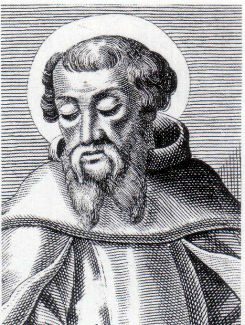
This time around, TFT goes after Clement of Alexandria. Torrance has a surprisingly balanced view of Clement (pictured), crediting him for contributing to the development of both a "scientific" approach to biblical hermeneutics (which Torrance likes) and "gnostic" approach to scripture dividing the plain historical reading from the mystical meaning, resting on an epistemological dualism between the sensible world and the intelligible word (which Torrance likes not so much).

This chapter was sizable and I don't want to spend a lot of time on it because the same themes keep coming into play. The contribution Clement makes to the history of hermeneutics that Torrance approves of are described in much the same way as Torrance's treatment of Clement's contemporary, Irenaeus. The deficiencies are comparable (and, Torrance argues, somewhat attributable) to Philo, an earlier fellow Alexandrian. Thus, I'll make some comments on the chapter, and then I'll springboard to some reflections of mine on what Torrance has done here.

First, Clement (in Torrance's description) understands faith to be "a divine power deriving from the force of the truth itself" (131). It originates in the encounter of the Word, creating in us "the new eye, the new ear, and the new heart which we need to apprehend what is given." In short, faith is neither blind nor depending on some prior knowledge; it is the establishment of an entirely new knowledge on the basis of God's revealed Truth. Clement then proceeds in terms of Aristotelian logic by employing faith as a first principle on which we can then build a scientific knowledge of God, calling into question presuppositions derived from sources other than the revealed truth known through faith. (Though faith is called into being by God's Word, it is not done so irresistibly. Torrance highlights Clement's awareness that faith "has a voluntary relation to the truth", claiming that "we are persuaded and not just compelled to believe" 133.)

What really struck me and knocked me on my donkey here is when Torrance begins to describe Clement's distinction between theology (the science that begins with faith in the way just described) and natural science and philosophy. This paragraph is worth quoting in its entirety:
The reality with which philosophy or science is concerned is passive, whereas the reality that gives rise to theology is active and dynamic. This means that in faith we have to do with a self-operating wisdom mediated to us through the Word. Faith is the strength and power of the truth , or a grace from God. Hence in interpreting the truth we have to do with a truth that interprets itself. The primary reason for this difference is that God himself is the truth of theological knowledge, God in his Word and Son revealing himself and saving us, God who is known only by his own power. (135)
There isn't much in this paragraph that I hadn't previously read in Torrance elsewhere and in Barth, but that very first sentence made something click in a new way. Let me briefly describe my former understanding of God's Word as I picked it up somewhere between church, Christian school and Bible college: after Israel got everything wrong by focusing on law, Christ came and made a way for us to be saved through by grace through faith. God has given us His Word (ie, the Bible) to tell us about this. He has also given us His Spirit to help us understand what the Word says. This understanding sees the Word as an external object which is basically passive, while the Spirit is active internally helping me to understand what I read when I pick up my Bible.

The distinction Torrance (via Clement) draws here shatters that picture. God's Word is not like a fossil that lays passively as the scientist approaches it to study it. If we take the prologue to John's gospel seriously, we must understand the Word of God in a radically personal way; "the Word became flesh". Since the Word is the risen and ever-living Lord, He is actively seeking to impart knowledge to us human beings. This is certainly done only through the historical Jesus Christ as attested by the prophets and apostles of the Old and New Testaments, but my reading of those fixed texts (though in the power of the Spirit) cannot be all we mean when we speak of approaching the Word of God; we encounter the risen Christ, the living and active Word of God in those texts. To put it another way, when I read the (passive) Bible, I encounter the (active) Word of God, (actively) pressing upon me, calling me to repent of my pride and ignorance and yield to Him, while at the same moment the Holy Spirit quickens my spirit, internally enabling me to say "Yes!" to God's Word addressed to me. Thus the Word and the Spirit work in tandem, the Word in an external objectivity and the Spirit in what Torrance has elsewhere called an "inward objectivity" (rather than subjectivity) leading people to knowledge of the Father.

This kind of trinitarian understanding of God's Word (aka Barth's understanding as furthered by Torrance) is a helpful corrective to many aspects of Evangelical theology, particularly its doctrine of Scripture. The Bible is God's Word in that it testifies to the eternal/incarnate Word of God, but we are led into trouble if we aren't careful in how we talk about scripture - the Word is a person of the triune Godhead; we cannot speak of the Bible as a person of the triune Godhead, but we can speak of it as divinely inspired servant of the eternal triune Lord and testimony to God's work of creation and redemption within human history.

Wednesday, October 7, 2009

Righteousness Requirement?

One thing you come up against quite a bit in Torrance's theology is the idea that revelation and reconciliation go hand in had. That is, one cannot be said to know God who is not drawn by Christ into conformity with his perfect obedience and love of the Father. Knowledge and holiness affect each other.

I'm not sure how others take this, but I think its awesome, and therefore true. What is interesting is when he applies this to biblical interpretation. I mentioned this briefly in point 4 of the Divine Meaning pt. 1 post, but I wanted to return to it and see what anyone else thinks about it. To allow Torrance to speak for himself,, "The Word of God comes to us in the Bible and can be heard as such only within our experience of God's saving activity in the Lord Jesus Christ" (p. 9). This implies, and Torrance makes this explicit in regards to theology in general in The Mediation of Christ, that a wicked, unrepentant person will be unable to mentally understand the gospel, let alone live according to it, no matter how much training they have had in biblical interpretation.

Any thoughts on this? It seems both healthy and dangerous to me. Healthy in that it locates the revealing power of God in the Word that became flesh and is living and active, rather than in the Word that became text and can parsed and argued until kingdom come with no increase in understanding. It seems dangerous on the other hand in that it may allow for spiritualized, subjective interpretations under the supposed authority of some direct personal revelation anyone might claim to have. Torrance is keenly aware of this danger and guards against it by marrying this need for "our experience of God's saving activity" with the need for an objective "scientific hermeneutic" that gives our understanding of the gospel some objectivity. I guess I just always saw the Bible and even our ability to understand it rightly as a universally objective given that enabled the possibility of subjectively experiencing God's saving activity. Thinking about it, though, Torrance really isn't introducing a subjectivity into biblical interpretation, but saying both that the objectively human word of scripture must be approached by a scientific hermeneutic and the objectively divine Word speaking through the Bible must be approached by what Torrance elsewhere calls the inner objectivity of the Spirit enabling faithful hearing, for the Bible as a unity of human word and divine Word to be rightly understood.

Tuesday, October 6, 2009

Divine Meaning pt. 3

I skipped a few chapters in T. F. Torrance's Divine Meaning to the chapter "Early Patristic Interpretation of the Scriptures", though I've since promised my advisor that I will go back and read the earlier chapters. This is a long (perhaps longer than it needed to be) essay tracing the development of a scientific exegesis of scripture from Justin Martyr through Melito of Sardis to Irenaeus. The meat of it is that because the Gnostics could justify any teaching they wanted by appealing to scripture through the use of sloppy interpretation (eisegesis), these early Church Fathers perceived the need to develop ways of interpreting scripture that arose from the nature of scripture itself so that the pure proclamation of Jesus Christ, the kerygma, could be preserved from heresy.

One point of note is Torrance's interest in distinguishing typological interpretation of Old Testament passages as fulfilled in the history of Jesus Christ, a practice Torrance cautiously affirms, and allegorical interpretation of passages from the Old and New Testaments depicting ostensibly historical events as finding their real meaning in timeless esoteric truths, a practice Torrance vehemently denounces as rooted in Platonic dualism between the sensible and intelligible, aka the boogie monster.

The practical difference seems to be that allegory can get you anywhere, while typology always points you to Christ; allegory has the potential to break up the Truth of the gospel into truths, or even to break reality into, yes Torrance, a dualism between the sensible and intelligible, while typology holds together all of scripture in the one truth of Jesus Christ. Torrance puts it this way:

Typology of this kind, which must not be confused with allegory, was an important part of early Church exegesis, for it was a reflection of the deep connections between the Christian Gospel and the ancient past, and an important tool in its battle against gnostic and Marcionite attempts to cut it away from its historical sources and its ground in the fulfillment in space and time of God's creative and redemptive acts. Patristic typology had its roots in Palestinian Judaism. It had its significance within the inseparable relation of word and event and the dramatic images that it involved, and it arose through the use of cultic patterns to point ahead to the enactment and fulfilment in decisive events within the history of the covenant people of God. It was the fulfilment of the ancient promises and figures in the birth and life and death of Jesus Christ that brought it into prominence in early Christianity, for with that fulfilment it was possible to interpret the history of Israel as the pre-history of the Incarnation, and to see how the patterns of Israel's life, manifested in the great events of its history and reflected in the cult, partially realised in the ordeal of suffering, and interpreted by the prophets, all converged in the fact of Christ. Such interpretation of the Old Testament which set forth an account of the acts of God in the old and new economies of Israel and the Incarnation as the fulfilment of the one saving purpose became essential from the start of the Church's life, for it not only assimilated the Old Testament revelation with the New Testament revelation but preserved the unity of the doctrine of God.

This typological way of interpreting the Old Testament seems to be finding renewed popularity. I myself find it helpful and edifying. Torrance seems to as well, but he also sees how easily it slid into allegorical readings that enabled the Gnostics. This necessitated a stronger framework within which to interpret scripture that would not be so prone to fanciful perversions.

This he finds in Irenaeus, in whose hermeneutics Torrance detects three active principles at work. First is the rule of truth, which seems similar to the Reformers' doctrine of the perspicuity of scripture, though Irenaeus ties it to the perspicuity of reality and God's purposes for all of reality in the Gospel. The driving idea here is that though there are parables and other passages of scripture in which the meaning might not be immediately clear, the historical reality of what God has done through Israel and supremely in Christ, to which all of scripture points, is abundantly clear. This clarity lays an obligation on the interpreter of the Bible to interpret it in all its parts according to that clear historical truth.

Second is the body of truth, which refers to the order and connections in the history of God's work in Israel and Christ. One cannot read scripture in a blind way so that they are not mindful of whether they are reading the Old or the New Testament, whether a passage is referring to Christ's first or second coming, or other such distinctions. Since God has acted and revealed himself in history, that history has an important order of events that must be borne in mind when interpreting scripture.

Third and finally is the rule of faith, by which Irenaeus means that scripture must always be interpreted according to the proclamation of the historic Christian faith. This may seem circular (we interpret scripture according to the proclamation of the gospel which we find in scripture), but it is merely an acknowledgment that the Bible came about and is to be interpreted within the history of the proclamation of the gospel so that no generation has the right to break itself off from that history of proclamation and decide that the Bible means something entirely new. We must interpret scripture not privately or without regard to history, but as the church and within the ongoing and millennia old life of the church, giving deference to the weight of agreement on essential matters from the time of the early fathers to now.

In this way, Torrance argues, we can allow scripture to open its truths to us in a clear and objective way. As I read this, I couldn't help but imagine every small group Bible study I've ever been to where once the passage is finished being read, after an awkward pause, someone asks the group, "So what does this passage mean to you?" Torrance, by pointing us to the wisdom of the ancients, can help us do better.

Friday, October 2, 2009

Karl Barth Weighs in on Scripture

In my continuing pursuit of a deeper knowledge of the nature and function of the Bible, I came across this intriguing paragraph in Barth's Church Dogmatics:


...we are speaking of the Jesus Christ attested in Scripture. The One of whom we have said that He lives in the sense described, is not then the creation of free speculation based on direct experience. He is the One to whom the history of Israel moves from the very first as to its goal, and from whom the history of His community springs. He is the One whose own history is the end of the one and the beginning of the other. He is the One who is visible, who makes Himself visible, in the documents of this whole historical nexus. He, this One, lives in the figure and role, in the being, speech, action, passion and death, in the work, which are all ascribed to Him in these documents, in the features which constitute the picture of His existence as delineated and represented in these documents. The fact that this One lives, and what it means that He lives, are not things invented or maintained of ourselves. If we say them responsibly, our own responsibility is only secondary. We really draw on the biblical attestation of His existence. For in this attestation He Himself lives, certainly as its origin and theme, but even as such only the mirror of the picture which is offered. It is He who lives, not the picture. But He Himself lives only in the form which He has in the picture. For it is not a picture arbitrarily invented and constructed by others. It is the picture which He Himself has created and impressed upon His witnesses. When we say that Jesus Christ lives, we repeat the basic, decisive, controlling and determinative statement of the biblical witness, namely, that He, very son of God and Son of Man , the Mediator between God and man, the One who lives the life of grace, the Lord and Servant, the Fulfiller of the divine act of reconciliation, that He, the One, has risen from the dead, and in so doing shown Himself to be who He is. He lives as and because He is risen, having thus shown that He lives this life. If there is any Christian and theological axiom, it is that Jesus Christ is risen, that He is truly risen. But this is an axiom which no one can invent. It can only be repeated on the basis of the fact that in the enlightening power of the Holy Spirit it has been previously declared to us as the central statement of the biblical witness (CD IV.3.1 p. 44).

Thursday, October 1, 2009

Divine Meaning pt. 2

Chapter 1 of Thomas F. Torrance's Divine Meaning is called "The Complex Background of Biblical Interpretation" and it is an appropriate title. It traces pre-Christian and early Christian developments in hermeneutics (interpretation). His chief aim is to expose the nasty effects of Hellenistic modes of thought on Biblical interpretation as these modes of thought found expression in Hellenistic hermeneutics, particularly those of Zeno and the Stoics, Jewish hermeneutics, particularly those of Philo, and finally Gnostic hermeneutics, particularly those of Marcion. Once again, the big bad guy he wants to slay is dualism, the split between mind (spirit, God) and matter (time, space) cemented by Plato into Western thought.

(If you'd prefer to avoid my attempt to squeese Torrance's reading of this history into one paragraph, go ahead and skip this paragraph and go straight to Torrance's conclusions about how the Gnostic Marcion's interpretations of scripture have had a lasting effect on Christian hermeneutics.) The narrative he traces looks (briefly) like this: early mythology presents the gods, the ultimate beings, existing under the limitations of time and space -> Plato rejects myth by seperating the timeless world of the mind and spirit from the temporal world of matter -> Stoicism tries to bring these worlds back together by seeing the rationality of the material world as a window into the eternal so that timeless truths of cosmology and ethics can be discerned even in the older myths through the use of a new hermeneutic, allegory, in which a literal reading of the myths is set aside in favor of a moral or philosophical one -> allegorical interpretation finds its way into Jewish interpretation of the Old Testament through Philo who sees certain texts depicting God acting within human history as needing to be interpreted in a non-literal (ie. allegorical) way in order to preserve God's transcendence over the creaturely realm -> early Gnosticism widens the gap between God and humanity even further by cutting God off even from the rational activities of humanity, seeing the only path to God as transcending this world altogether through some kind of non-rational intuitive grasp of eternal truth -> this leaves Gnostic hermeneutics of scripture in utter ruins, seeing the final referent of all statements of truth as being totally cut off from the statement itself, limited as it is by its context in time and space, and therefore any text can be interpreted in almost any way -> the Gnostic Marcion, though denounced as a heretic, leaves a lasting negative impact on Christian interpretation of the Bible in the following two ways (and here we need to slow down a bit):

1. Marcion draws a sharp antithesis between creation and redemption, removing redemption totally from time and space to some other world. The effects of this are a Jesus seen as alien to our humanity and an interpretation of biblical texts that speak of salvation and redemption in terms of human history as actually pointing to some otherworldly paradise. Is this perversion still exerting influence on our Christian thinking and spirituality? I think so. Whenever a Christian defines salvation as going to Heaven when you die, this perversion and reduction of the gospel, whether owing to Marcion or not, seems to be at play. They are cutting what God can do, has done and is doing off from the life He has actually given to us and in which He speak to us.

2. Marcion draws a sharp antithesis between the Old Testament and New Testament, Law and Gospel, Israel and Church. This is certainly still crippling our understanding of scripture. This not only taints our ability to see God's justice and mercy as essentially unified, but also, Torrance stresses, it taints our ability to see Jesus as he truly is. Us Gentile Christians have an enormous difficulty seeing Jesus in his Jewishness. We tend to see it as incidental, like Jesus might just as likely (maybe more likely) have been born to a Saxon virgin as a Jewish one. Do we see the same God at work in the Old and New Testaments? Do we see the work begun by God with Abraham and completed in Christ as the same work? If so, can we legitimately think of Christ in a completely Gentile (dualistic) way? Comments are welcome.