In part 1 of the Two Testaments, "Christ the Lord of Scripture", I argued that the Bible is the Word of God in a sense derived from its content, and that Jesus Christ, the eternal Word of God is the Bible's content. In other words, there are not two Word's of God, Scripture and Christ, but only one, Christ; the Bible can be spoken of as the Word of God to us only because that is where we meet and hear Christ, the incarnate Word of God, speaking to us.
In this post I'd like to try to speak about the difference the Old Testament and the New Testament. If you recall from last post, my reason for laying all of this out is to clarify why, while I'm predisposed to take everything in Scripture at more or less face value, I'm not compelled to take all the stories from the Old Testament, particularly those from its earlier parts, absolutely literally, while I take New Testament accounts basically literally.
In part 1 I wrote that Christ bound himself to the testimony of his apostles, as we see in Luke 10:16, a verse that is becoming more and more important to me theologically: "He who listens to you listens to me; he who rejects you rejects me; but he who rejects me rejects him who sent me." Christ spoke these words to a group of 70 (or 72) of his followers as he sent them out on a mission to towns he would be going through in Judea on his way to Jerusalem. In Luke's second writing, the book of Acts, just before Jesus ascends to heaven, he tells his apostles "you will receive power when the Holy Spirit comes on you; and you will be my witnesses in Jerusalem, and in all Judea and Samaria, and to the ends of the earth" (Acts 1:8). Thus Christ binds himself to the apostles' testimony about him as their ministry of testimony expands beyond Judea into the whole world. This sets the church and all of its tradition in motion. All of us who believe in Christ today and are thus a part of his church are a part of that ongoing tradition of speaking of Christ as Lord to the ends of the earth. (More on this in part 3.)
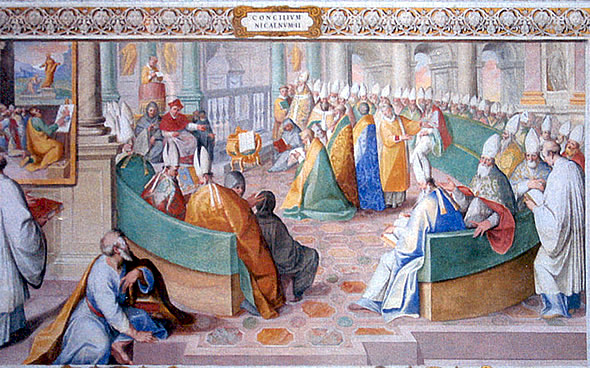
However, early in the church's life it recognized the need to set apart the first generation's testimony as uniquely authoritative. It saw that though Christ himself is our Lord and example for how we must live, in a certain sense it is the apostles that are really our model. Though Christ reveals both God and our true humanity to us, he is himself not a Christian; as a union of God and humanity in one man there is a sense in which he is something we cannot be. The apostles are the first Christians and establish the pattern for how subsequent Christians are to live. In this sense Christ's statements in Luke 10:16 and Acts 1:8 quoted above apply uniquely to the apostles; it is in their testimony to Christ that he is to be heard - he is heard in our testimony only to the degree that our testimony conforms to theirs. Thus the writings of the apostles were set apart by the early church as a recognition of their unique authority in order to guard the church's testimony to Christ from slipping into error by holding it up to the standard of the apostles' testimony. This is what the New Testament is. To read it is to read the first Christians proclamation of the gospel that took place before their eyes and in their lives. At least for us Gentiles, as we come to faith in Christ, we come to hear him in the apostolic testimony of the New Testament.
So what of the Old Testament? Why do we read it if it comes before Christ and doesn't explicitly testify to him by name? We read the Old Testament because Christ binds himself to it, but in a significantly different way than the New Testament. Christ doesn't come from out of nowhere. He doesn't come onto the scene of humanity and try to start over from scratch. He comes in fulfilment of promises God had been making to a particular people for thousands of years. We read the Old Testament because we recognize that Jesus is a Jew, and we cannot understand him as such unless we read the Jewish Scriptures he read and regarded as authoritative. Almost everything Jesus says about himself he appropriates from the Old Testament.
But whereas the New Testament is something like a time capsule, the testimony of a single generation frozen in time, the generation of those who were eyewitnesses of Christ's life on earth, the Old Testament is a collection of writings composed and edited over hundreds if not thousands of years. It is a sample taken from a very living tradition and most of it is probably taken from fairly late in that tradition's life. The stories it contains were told and retold generation after generation as a part of Israel's culture and tradition, a culture and tradition that God had bound himself to and promised to bless all nations through. Jesus, as the fulfilment of those promises, binds himself to that culture and tradition as the context he is to be understood in, as when he opens the scroll of Isaiah and reads vv. 61:1-2, pointing to himself as their fulfilment. In this light, we Christians must then read the Old Testament as God's preface to his Gospel, the introduction of appropriate conceptual and linguistic (to borrow some language from Torrance) and religious practices with which to understand God's Messiah when he was to come. The Old Testament is thus indispensable to us, as it was to Christ and his apostles.
The Old Testament thus stands as the promise and the New Testament testifies to the promise's fulfilment. Christ binds himself to the Old Testament by standing within its tradition and drawing it to its long awaited fulfilment. Christ binds himself to the New Testament by promising to be present in the apostle's testimony as they take his good news to the ends of the earth. Christ is thus Lord over both testaments and both exist to testify to him. The differences between the two, however, the centuries long tradition of the Old and the eye-witness time capsule of the New, must be borne in mind as we read of their varying testimonies to his coming and his having come. In this light, while the history of God's covenant of promise with Israel which the Old Testament enshrines must be understood as a real history with certain crucial and defining moments (the exodus of Moses, the kingly reign of David, the exile), it would seem right to suspend judgement about (not reject) the historicity of discrete narratives from particularly early in Israel's history.